Mark Richard Zubro

Michael Nava for judge

Posted December 11

My friend and fellow mystery writer, Michael Nava, is running for San Francisco Superior Court judge. Michael is a good man and worthy of my endorsement, which he has, and your vote, which I hope you will be able to supply. Links for more information are at http/​/​www.navaforjudge.com and http:/​/​michaelnava.blogsport.com. While it is good to support our own, it is even better when one of our own is as qualified as Michael is for this judgeship position.


Posted November 14

Al Pope said it centuries ago, “Know then thyself.” Any self-help guru of the modern age worth his or her bestseller status prattles on about the glories of the inner working of our own selves. Even the armed services put out commercials reminding us to be the best we can be. All three aiming toward the goal of getting us to find our strength, or strengths if we’re lucky, and stick with them no matter what.

Well, it just so happens that what I am best at is being dull and boring. I’m a writer. I sit and I write. Sometimes I sit and I read. As an alternative I do lie down and read quite often. The lying down also helps lead to another activity at which I am a master, napping.

Dull and boring aren’t usually the perky skills one uses to punch up the old résumé. One wants to present the most positive impression so one often thinks more in terms of driven, active, go-getter. One, of course, would be wrong to think so in my case especially because dull and boring are just the skills I happened to need in working with my co-writers, Barbara D’Amato and Jeanne Dams, on our book, Foolproof.

If you’re looking for stories of wild drinking bouts in seedy bars, and roaring arguments among creative geniuses, and of wild eyed authors pounding out prose late into dark nights of angst, you’re in the wrong pew.

The most obvious example of the use of these skills, dull and boring, was in the final five days we worked on the book. It was a labor of three years, and we were almost done, but we needed to polish it to perfection. So we spent five days together at a secluded retreat, Barb’s place, working eight to twelve hours a day.

And what were we working on? Well, grammar, a lot. Did we go over every single sentence? If it wasn’t every single sentence, it sure felt like every single sentence. We checked verbs, we checked placement of independent and dependent clauses, we checked plot, structure, pacing. And those adverbs? Slashed and cut ruthlessly.

And I enjoyed it. For me to do that kind of intense work takes a lot of dull and boring which fortunately I have tons of and to spare. I’ve perhaps built up even a bit of a surplus over a lifetime of dull and boring. And it sure came in handy. Discussing verbs, does this one have the exact proper nuance of what we wanted? Examining proper tenses or figuring out if we could get the pluperfect subjunctive in there somewhere? Okay, maybe I’m kidding about this last part. But in the main, gloriously tedious. I was made for it.

The time spent was even more enjoyable because of Jeanne and Barb. They are such marvels to work with. And funny! You can’t imagine.

You planning on collaborating? Here’s why our collaboration worked, I think. One, we’d known each other since forever. Two, we’d been in a reading group together for ages. We’d get together every few weeks and read our own stuff that we were working on out loud to each other. I know this improves my work, but it made us each aware of our work and our styles. Third, while this may or may not have been stated, I think one of the keys was that for all of us, no disagreement was worth sacrificing one smidge of our friendship. I may be a nerd but when it comes down to a choice between a verb and a friend, I always pick the friend. Now if it was between a hyphen and a friend, we might have to talk.

People have asked us how we worked. Did we alternate chapters? That kind of thing. Actually, we took the basic idea, and then one us would say, I’d like to try this bit, or that bit. The brilliant opening – Barb. Her openings are always so good in all her books. The clever twist at the end – Jeanne. We were practically cheering when she said it out loud for the first time. Me – I did lots of the more traditional thriller stuff.

And yet as we each gave suggestions to the others, we’d go back to work and try to get it to come our right. Suggestions for changes were always discussed, respected, and most often used. The book was better for them. Those last five days for example. We were pretty much polishing, but then we’d get to a section and realize, that’s not right. Eventually there were at least three such sections. We divided them up, went to separate parts of the house, rewrote, came back, read them all out loud, and made sure they were as perfect as we could make them.

While writing Foolproof together, we were all working on our own stuff at the same time. Then we had to find an agent for the book and then the agent, bless Susan, found an editor, and we find ourselves with a soon to be published book. A total of about five years work. Worth every minute.

Foolproof is due out this December. As for what the books is about. It’s what I call a left-wing political thriller. We’ve all had to suffer through the right-wing paranoid thrillers being churned out by what I consider less than champion writers who would be out there with the nutty tea-baggers waving their fists and screaming. In our book, we’ve got intelligent people working desperately against time to save the greatest democracy in the world from a right-wing conspiracy to steal the election electronically. Works for me.


Posted November 12

Barbara D’Amato, Jeanne Dams, and Mark Zubro have written a book together. The title is Foolproof. It is due out in December.

The idea for the book came about when Mark Zubro woke up in the middle of the night or early in the morning of December 26, 2003. He wrote a page of notes about a possible plot to steal the US election electronically.

Zubro emailed these notes to Barb and Jeanne that same morning.

Barbara, Jeanne, and Mark are in a reading group together. That is they get together every few weeks and read what they are writing out loud to each other. These are serious working meetings. They discussed the project at their meetings and by email, and by early February 2004 they had agreed to write the book and had set out a series of guidelines on how they would proceed. Among the most important of these was the notion that they would discuss at great length and in enormous detail precisely where the plot was going to go. This was designed to help eliminate creative differences in the writing. While they didn’t have a formal contract among themselves, they found assigning responsibilities reasonably easy.

The three of us have known each other and worked together for many years, and formed a warm friendship. The one absolute rule we established from the start for Foolproof was that if at any time the project threatened the friendship, the project would be scrapped. It never happened, thank goodness.

The best ways to describe their working together are methodical, logical, and professional. At numerous intervals that would check what they’d written against what they planned and either revised the work or the plan or both to meet the needs of their collective imaginations.

They continued to meet and discuss frequently but also began writing. By April 13, 2004 Barb had emailed a proposed opening. By May 10, 2004 character sketches of all major characters were being emailed back and forth, each adding, revising, including new thoughts.

This process of reading each section out loud continued throughout the entire manuscript preparation so that eventually the entire thing had been read out loud in the presence of all three. Reading one’s work out loud, all three authors agree, makes for a far better manuscript.

The final preparation took five eight-to-twelve hours days of working on the manuscript, attempting to polish it to perfection line-by-line and verb-by-verb. So after three years and hundreds and hundreds of emails and innumerable meetings they finished the book. It is set to be published December 22, almost six years to the day from the first sent email.

Barbara D’Amato, Jeanne Dams, and Mark Zubro have written a book together. The title is Foolproof. It is due out in December.

The idea for the book came about when Mark Zubro woke up in the middle of the night or early in the morning of December 26, 2003. He wrote a page of notes about a possible plot to steal the US election electronically.

Zubro emailed these notes to Barb and Jeanne that same morning.

Barbara, Jeanne, and Mark are in a reading group together. That is they get together every few weeks and read what they are writing out loud to each other. These are serious working meetings. They discussed the project at their meetings and by email, and by early February 2004 they had agreed to write the book and had set out a series of guidelines on how they would proceed. Among the most important of these was the notion that they would discuss at great length and in enormous detail precisely where the plot was going to go. This was designed to help eliminate creative differences in the writing. While they didn’t have a formal contract among themselves, they found assigning responsibilities reasonably easy.

The three of us have known each other and worked together for many years, and formed a warm friendship. The one absolute rule we established from the start for Foolproof was that if at any time the project threatened the friendship, the project would be scrapped. It never happened, thank goodness.

The best ways to describe their working together are methodical, logical, and professional. At numerous intervals that would check what they’d written against what they planned and either revised the work or the plan or both to meet the needs of their collective imaginations.

They continued to meet and discuss frequently but also began writing. By April 13, 2004 Barb had emailed a proposed opening. By May 10, 2004 character sketches of all major characters were being emailed back and forth, each adding, revising, including new thoughts.

This process of reading each section out loud continued throughout the entire manuscript preparation so that eventually the entire thing had been read out loud in the presence of all three. Reading one’s work out loud, all three authors agree, makes for a far better manuscript.

The final preparation took five eight-to-twelve hours days of working on the manuscript, attempting to polish it to perfection line-by-line and verb-by-verb. So after three years and hundreds and hundreds of emails and innumerable meetings they finished the book. It is set to be published December 22, almost six years to the day from the first sent email.


Posted November 9

My new book written with Barb D'Amato and Jeanne Dams will be out this December. The title is Foolproof. It is a left-wing thriller. Finally, after all that drivel in right-wing thriller, we've penned an intelligent thriller based on reality and facts and actual possibilities instead of far-right hysteria.


Posted August 20

Barak Obama - It is absolutely vital that he be elected president. I support him strongly. It would be great if we could have the adults back in charge again instead of war-mongering fascists.


Posted July 4

Keith Olbermann's commentaries are fabulous. This is his from July 3.

From Iraq to Scooter Libby, Bush and Cheney have broken America's trust and stabbed this nation in the back. It is time for them to go.

By Keith Olbermann

Jul. 04, 2007 | Finally tonight, as promised, a Special Comment on what is, in everything but name, George Bush's pardon of Scooter Libby.

"I didn't vote for him," an American once said, "But he's my president, and I hope he does a good job." That -- on this eve of the Fourth of July -- is the essence of this democracy, in 17 words. And that is what President Bush threw away yesterday in commuting the sentence of Lewis "Scooter" Libby.

The man who said those 17 words -- improbably enough -- was the actor John Wayne. And Wayne, an ultra-conservative, said them when he learned of the hair's-breadth election of John F. Kennedy instead of his personal favorite, Richard Nixon, in 1960.

"I didn't vote for him but he's my president, and I hope he does a good job." The sentiment was doubtlessly expressed earlier. But there is something especially appropriate about hearing it, now, in Wayne's voice: The crisp matter-of-fact acknowledgment that we have survived, even though for nearly two centuries now, our commander in chief has also served, simultaneously, as the head of one political party and often the scourge of all others.

We as citizens must, at some point, ignore a president's partisanship. Not that we may prosper as a nation, not that we may achieve, not that we may lead the world, but merely that we may function.

But just as essential to the 17 words of John Wayne is an implicit trust, a sacred trust: that the president for whom so many did not vote can in turn suspend his political self long enough, and for matters imperative enough, to conduct himself solely for the benefit of the entire republic.

Our generation's willingness to state "We didn't vote for him, but he's our president, and we hope he does a good job" was tested in the crucible of history, and earlier than most.

And in circumstances more tragic and threatening. And we did that with which history tasked us. We enveloped our president in 2001. And those who did not believe he should have been elected -- indeed those who did not believe he had been elected -- willingly lowered their voices and assented to the sacred oath of nonpartisanship.

And George W. Bush took our assent, and reconfigured it, and honed it, and shaped it to a razor-sharp point and stabbed this nation in the back with it.

Were there any remaining lingering doubt otherwise, or any remaining lingering hope, it ended yesterday when Mr. Bush commuted the prison sentence of one of his own staffers.

Did so even before the appeals process was complete. Did so without as much as a courtesy consultation with the Department of Justice. Did so despite what James Madison -- at the Constitutional Convention -- said about impeaching any president who pardoned or sheltered those who had committed crimes "advised by" that president.

Did so without the slightest concern that even the most detached of citizens must look at the chain of events and wonder: To what degree was Mr. Libby told, "Break the law however you wish -- the president will keep you out of prison"?

In that moment, Mr. Bush, you broke that fundamental compact between yourself and the majority of this nation's citizens, the ones who did not cast votes for you.

In that moment, Mr. Bush, you ceased to be the president of the United States. In that moment, Mr. Bush, you became merely the president of a rabid and irresponsible corner of the Republican Party.

And this is too important a time, Sir, to have a commander in chief who puts party over nation. This has been, of course, the gathering legacy of this administration. Few of its decisions have escaped the stain of politics. The extraordinary Karl Rove has spoken of "a permanent Republican majority," as if such a thing -- or a permanent Democratic majority -- is not antithetical to that upon which rests our country, our history, our revolution, our freedoms.

Yet our democracy has survived shrewder men than Karl Rove. And it has survived the frequent stain of politics upon the fabric of government. But this administration, with ever-increasing insistence and almost theocratic zealotry, has turned that stain into a massive oil spill.

The protection of the environment is turned over to those of one political party who will financially benefit from the rape of the environment.

The protections of the Constitution are turned over to those of one political party who believe those protections unnecessary and extravagant and quaint.

The enforcement of the laws is turned over to those of one political party who will swear beforehand that they will not enforce those laws.

The choice between war and peace is turned over to those of one political party who stand to gain vast wealth by ensuring that there is never peace, but only war.

And now, when just one cooked book gets corrected by an honest auditor, when just one trampling of the inherent and inviolable fairness of government is rejected by an impartial judge, when just one wild-eyed partisan is stopped by the figure of blind justice, this president decides that he, and not the law, must prevail.

I accuse you, Mr. Bush, of lying this country into war. I accuse you of fabricating in the minds of your own people a false implied link between Saddam Hussein and 9/​11. I accuse you of firing the generals who told you that the plans for Iraq were disastrously insufficient. I accuse you of causing in Iraq the needless deaths of 3,586 of our brothers and sons, and sisters and daughters, and friends and neighbors. I accuse you of subverting the Constitution, not in some misguided but sincerely motivated struggle to combat terrorists, but to stifle dissent. I accuse you of fomenting fear among your own people, of creating the very terror you claim to have fought. I accuse you of exploiting that unreasoning fear, the natural fear of your own people who just want to live their lives in peace, as a political tool to slander your critics and libel your opponents. I accuse you of handing part of this republic over to a vice president who is without conscience and letting him run roughshod
over it.

And I accuse you now, Mr. Bush, of giving, through that vice president, carte blanche to Mr. Libby to help defame Ambassador Joseph Wilson by any means necessary, to lie to grand juries and special counsel and before a court, in order to protect the mechanisms and particulars of that defamation with your guarantee that Libby would never see prison and, in so doing, as Ambassador Wilson himself phrased it here last night, of becoming an accessory to the obstruction of justice.

When President Nixon ordered the firing of the Watergate special prosecutor Archibald Cox during the infamous "Saturday Night Massacre" on October 20th, 1973, Cox initially responded tersely, and ominously.

"Whether ours shall be a government of laws and not of men is now for Congress and, ultimately, the American people."

President Nixon did not understand how he had crystallized the issue of Watergate for the American people. It had been about the obscure meaning behind an attempt to break in to a rival party's headquarters, and the labyrinthine effort to cover up that break-in and the related crimes.

And in one night, Nixon transformed it. Watergate -- instantaneously -- became a simpler issue: a president overruling the inexorable march of the law, insisting -- in a way that resonated viscerally with millions who had not previously understood -- that he was the law.

Not the Constitution. Not the Congress. Not the courts. Just him. Just, Mr. Bush, as you did, yesterday.

The twists and turns of Plamegate, of your precise and intricate lies that sent us into this bottomless pit of Iraq; your lies upon the lies to discredit Joe Wilson; your lies upon the lies upon the lies to throw the sand at the "referee" of prosecutor Fitzgerald's analogy, these are complex and often painful to follow and too much, perhaps, for the average citizen.

But when other citizens render a verdict against your man, Mr. Bush, and then you spit in the faces of those jurors and that judge and the judges who were yet to hear the appeal, the average citizen understands that, Sir.

It's the fixed ballgame and the rigged casino and the prearranged lottery all rolled into one, and it stinks.

And they know it.

Nixon's mistake, the last and most fatal of them, the firing of Archibald Cox, was enough to cost him the presidency. And in the end, even Richard Nixon could say he could not put this nation through an impeachment. It was far too late for it to matter then, but as the decades unfold, that single final gesture of nonpartisanship, of acknowledged responsibility not to self, not to party, not to "base," but to country, echoes loudly into history.

Even Richard Nixon knew it was time to resign. Would that you could say that, Mr. Bush. And that you could say it for Mr. Cheney. You both crossed the Rubicon yesterday. Which one of you chose the route no longer matters. Which is the ventriloquist, and which the dummy, is irrelevant. But that you have twisted the machinery of government into nothing more than a tawdry machine of politics is the only fact that remains relevant.

It is nearly July Fourth, Mr. Bush, the commemoration of the moment we Americans decided that rather than live under a king who made up the laws, or erased them, or ignored them -- or commuted the sentences of those rightly convicted under them -- we would force our independence and regain our sacred freedoms.

We of this time -- and our leaders in Congress, of both parties -- must now live up to those standards which echo through our history. Pressure, negotiate, impeach: get you, Mr. Bush, and Mr. Cheney, two men who are now perilous to our democracy, away from its helm.

And for you, Mr. Bush, and for Mr. Cheney, there is a lesser task. You need merely achieve a very low threshold indeed. Display just that iota of patriotism which Richard Nixon showed on August 9th, 1974.

Resign.

And give us someone -- anyone -- about whom all of us might yet be able to quote John Wayne, and say, "I didn't vote for him, but he's my president, and I hope he does a good job."

-- By Keith Olbermann


Posted June 24, 2007

They did it again. Sunday, June 24, Chicago Sun-Times has numerous articles about gay people. The front page of the Controversy section has an article headlined "Faggot vs. Queer." Throughout the article the author, Kevin Nance, uses both words. When it comes to the N-word he uses that phrasing - the N-word. It's still okay for him to use anti-gay epithets but not racist ones. To me they are one and the same. The F-word is as vile and insulting to me as the N-word is to African Americans. I'm sick and tired of the double standard. And don't give me that bogus "free speech" argument. I'm aware that Mr. Nance has a right to free speech. I have a right to free speech. We all have a right to free speech. I've got that part. But Mr. Nance uses the N-word instead of the epithet. I dare him and the Sun-Times to use the complete N-word in a large print headline as they did with the f-word. It's not going to happen, and it shouldn't. And the same goes for the f-word when refering to gay people, it shouldn't happen. Mr. Nance and the Sun-Times, I find it demeaning and insulting. You just don't get it.

Posted April 2007

Speech given upon my retirement - from teaching after thirty-four years and after being union president twenty years.

I have taught for thirty-four years. I guess I have seen some negative things, but I have seen far more positive things. I have seen far more reasons for hope in this world than I have for despair.

First I must thank my friends who have been so kind and suportive over the years, Dianna, Julie, John, Sandy, Carla, Priscilla, Jane, Peg, Arlene, Bonnie, Jamie, Gail, Jim, Arliss, Mary Kay, Karen but especialy Paul and Pam. They have been so kind and helpful at key and critical moments. A huge thank you to them.

I also want to thank Keith and Joyce. When we talk about positive people, positive things, and hope in this world, I think about the working relationship I have with them. We have brought expertise and kindness to difficult situations and moments. I am proud to have worked with them.

I am proud to have been your union president. If I have been able to be strong as your president, it is because of the strength you have. If I have asked you to come out and show your support, you have always responded. Your passion, concern, and caring have made a true difference. If I had to pick one, the proudest moment was when together we helped Ric when he was so ill. I could hardly be prouder of a group of people than I was then. I see hope in this world when I think of such kindness and generosity.

And I see hope in this world when I think of the children in my classes. I see hope in the sparkle in a child's eyes when they have learned a new concept or smiled over a success at learning a new thing. They are what this is all about. If I have helped them and you in my small way, then I am content with my thirty-four years.

As for the future. I think I shall appropriate Winston Churchill's words from a vastly different context. I do not look upon my retirement as the end, or even the beginnning of the end, but perhaps this is the end of the beginning.

Tom and Scott Series
Books by Mark Richard Zubro
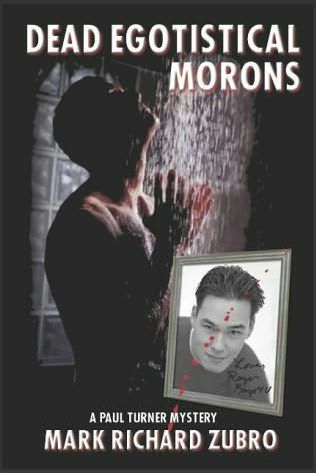
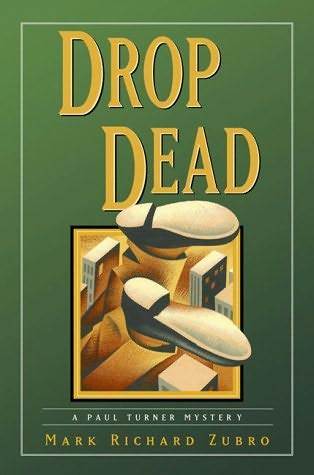
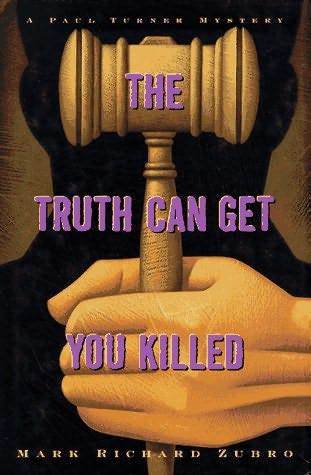
Paul Turner mysteries

Find Authors